Revalor Brand Growth Hormone Beef Cattle

Issue of High Potency Growth Implants on Boilerplate Daily Gain of Grass-Fattened Steers
1
Instituto de Producción Animal, Universidad Austral de Chile, Valdivia-Chile, Valdivia 5090000, Chile
2
Centro de Investigación de Suelos Volcánicos, Universidad Austral de Chile, Valdivia 5090000, Chile
3
Private consultors, Frutillar 5620000, Chile
4
Escuela de Agronomía, Universidad Católica de Temuco, Temuco 4780000, Chile
*
Writer to whom correspondence should be addressed.
Received: 5 July 2019 / Revised: 6 August 2019 / Accepted: 9 August 2019 / Published: 21 August 2019
Simple Summary
Improving efficiency in beef cattle production requires the adoption of technologies that are depression cost but high in render. High potency growth-promoting implants (HGPs) are widely used under feedlot conditions but there are few reports of their use under grazing atmospheric condition. We conducted a trial to assess whether the use of high potency HGPs have advantages for grass-finished cattle. Our results were similar to those reported for feedlot cattle, showing that the quality of the pastures was skilful enough to take advantage of the HGP engineering science, generating a marginal income that justifies the use of technology under grazing conditions.
Abstract
High potency growth promoter implants (HGPs) are widely used nether feedlot conditions but there are few reports nether grazing weather. The report's goal was to assess the upshot of HGPs on the average daily gain of steers fattened in pastures. A total of 57 crossbreed steers (Hereford × Angus)—initial body weight = 356.65 kg ± v.04 (SEM)—were randomly allocated to one of three groups: Control without HGP (n = 19), Synovex group (northward = 17), and Revalor group (due north = 21). The fattening menstruation was 67 days using paddocks of Lolium perenne L. and Trifolium repens L. Body weight was recorded three times in the flow. The data were analyzed using an analysis of covariance with a level of significance of five%. The boilerplate daily gain (ADG) (one.55 ± 0.07 and 1.48 ± 0.09 kg/d) and the total weight gain (103.4 ± 4.9 and 99.two ± 5.8 kg) were similar for Revalor and Synovex, respectively (p > 0.05). Moreover, HGP groups showed higher ADG and full weight gain (p < 0.01) than the command group (ADG = 0.93 ± 0.08 kg/d and a total weight gain of 62.2 ± 5.two kg). Last body weights were 527.8 ± eight.5 kg and 512.ii ± 9.9 kg for Revalor and Synovex, respectively; and 479.9 ± 10.one kg for Control. In conclusion, grazing-finished steers showed better performance when high potency HGPs were used, improving the ADG and last live body weight, generating a marginal income that justifies the use of the technology nether grazing atmospheric condition
1. Introduction
The use of anabolic growth promoter implants (HGPs) in feedlots is a production engineering that is considered routine in many parts of the earth. Its employ is based on the improvement in growth rate and feed conversion, as well every bit because it reduces the costs of alive weight proceeds [one]. HGPs improve daily weight gain (ADG) by 15 to 25% and feed efficiency by x to 15% when compared to non-implanted cattle [ii]. Information technology besides increases feed intake (6%), carcass weight (v%) and ribeye surface area [3]. Consequently, animals have a heavier carcass weight, while the benefits associated with the efficiency of feeding make a systematic and regular implant programme profitable for the producer. In the United States, the apply of HGPs increment income in the range of US $fifty to $210 per animal, depending on the strategy of implants used, that is, the number of implants used and its authorization [iii]. In addition, at that place is a negative public perception of beef production from an ecology standpoint, peculiarly due to the contribution of the sector to climatic change [iv,v,6].
In Republic of chile, nosotros estimated that this engineering science could generate returns of US $58 to $100 per beast, considering a single implant in the fattening phase. The difference in the returns is in function due to the United states of america payment system, which considers beef quality, while in Chile the chief drivers are live weight and age. Although this technology has numerous advantages, information technology has also been reported to take negative furnishings on marbling and meat tenderness, compromising quality [iii].
Virtually of the inquiry regarding HGPs has been carried out in intensive systems with high free energy density diets (grains or past-products of grains), with few studies assessing HGPs with diets rich in roughages. In most of these studies, the roughage source used is silage [7,8]. Other studies have evaluated the HGPs with grazing cattle but in the stocking phase, previous to the fattening only normally with HGPs of moderate dominance [9]. In summary, there are few studies assessing the issue of HGPs of high potency, on steers functioning during the fattening stage but nether grazing conditions [10,eleven]. It has been pointed out that nether grazing conditions comeback in the ADG is achieved ranging from 8% and 18% as a result of the differences in botanical composition and the quality of the pastures [12]. Because grasslands have a lower energy density compared to a feedlot diet, information technology is recommended to apply HGPs of moderate potency, while those of high potency should be used in animals that swallow high energy diets (rich in grains) [12]. Consequently, the general objective of the study was to compare the outcome of two types of loftier potency HGPs on the average daily weight gain of steers fattened under grazing weather and the respective marginal economic bear on.
2. Materials and Methods
This enquiry was conducted on a commercial farm in Southern Chile. All the procedures, including humane beast care and handling procedures, followed national legislation (Police force No. 20,380 on Protection of Animals; Decree No. 29 about regulations for the protection of animals during their industrial production, their commercialization and in other areas that hold animals), whose application is supervised by the National Service of Agronomics and Livestock (SAG), the competent authority in this affair.
two.i. Animals and Facilities
The study was conducted at a commercial subcontract located 8 km north of Frutillar city, in the same municipality. A total of 57 crossbred steers (Hereford × Angus) acquired in a private purchase were used. All steers were subjected to the aforementioned wellness program and handlings. Upon inflow (10 March 2018), steers were weighed (356.65 kg ± 5.04 SEM), dewormed (Levamisol 7.5% at 1 mL/12.five kg live weight (LW)) then kept in a divide grouping within the farm. In addition, they received an anti-clostridial vaccine, following the dose recommended past the manufacturer. Ane week later, steers were castrated by means of an emasculator, without anesthesia. The deworming program continued with Ivermectin (1 mL/fifty kg LW). During this period (prior to existence implanted), the animals' nutrition was based on pastures dominated past ryegrass, orchard grass, fescue and sweetgrass and clover, plus harvested forage (haylage bales) manufactured at the same farm. On September 22nd, steers received the third deworming treatment (1 dose of Ivomec-F at 1 mL/50 kg LW, plus Ivermectin 10 mg + Clorsulon 100 mg). In improver, they received the anti-clostridial vaccination recommended every 6 months. At the aforementioned time, steers were weighed and randomly assigned to one of the post-obit treatments: Command = steers without hormonal growth-promoting (HGP; northward = nineteen); Synovex = steers implanted with Synovex Plus® containing 200 mg of trenbolone acetate and 28 mg of estradiol benzoate ((Zoetis, Chile); n = 17); and Revalor = steers implanted with Revalor® containing 140 mg of trenbolone acetate and 20 mg of estradiol benzoate ((Intervet, Chile); n = 21).
All weighing procedures were done early in the mornings, iii times during the period started at 22 September 2019 and finished at 28 November 2018. Each steer was weighed individually by using the digital residual (Iconix model FX 1). Information were recorded in an Excel spreadsheet for farther assay. During the experimental period, cattle grazed pastures of ryegrass (Lolium perenne Fifty.) plus white clover (Trifolium repens L.). The nutritional characteristics of these pastures are presented in Tabular array 1. The feeding management consisted of daily grazing strips, with an estimated supply of 11 kg DM per steer.
2.2. Economic Marginal Analysis
The marginal economic analysis was carried out considering the differences in weight obtained between the implanted versus not implanted steers (final LW–initial LW). Considering control of dry matter intake was non feasible, neither DMI nor Conversion was analyzed. Likewise, the price of HGP plus the labor were estimated at U.s.a.$ iii.2 per animal. The price per kilogram of LW was obtained from a local Auction (US $one.7 per kg of alive BW) for the time when animals were sold on 26 November 2018 (http://www.fegosa.cl/preciososorno/precioosorno.html).
2.3. Data analysis
The experimental model used corresponded to a completely randomized pattern with three treatments. Each animal was considered an experimental and observational unit. The level of significance was five% and the statistical model evaluated was: Yij = μ + αi + εij; where μ corresponds to the mean; αi represents the outcome of ith handling and εij the experimental error associated to the ith animal of the jth treatment. All information were analyzed with the statistical package JMP v14.0 (SAS Institute, Charlotte, NC, USA).
3. Results
Weather condition conditions during the flow of report are presented in Figure 1. In general, ambient temperature (AT) was lower in September only increased over time. Reverse, pelting precipitations were higher in September and decreased over fourth dimension. Those weather weather allowed an average charge per unit growth of the pasture of 35, 40 and 60 kg DM/ha/d for September, October and Nov, respectively. Yet, the combination of lower AT and presence of moderate but continuous rain events during the first weeks of Oct resulted in a reduction of 24% the growth rate of the pasture when compared with the monthly average.
The nutritional characteristics of the pastures (Tabular array ane) were estimated from Anrique et al. [13]. The content of CP of the pasture duplicates the requirements for a fattening steer. According to the National Academies of Sciences and Medicine [14], CP requirement varies between 10 to 12%. During the jump season, the metabolizable energy (ME) and net free energy (NE) contents of the pastures are slightly lower than those observed in small cereal grains. The observed values of NFD and AFD in addition to literature reports for the area bespeak a loftier digestibility value of the organic matter, that is, a forage of very practiced quality and consequently with a high consumption potential.
A similar design of LW gain was observed for the three groups until the fourth dimension of implantation (Effigy 2). Although the LW proceeds was sustained over time, there was a lower boilerplate daily gain (ADG) for the menstruum after HGP application (between 22 September 2018 and 10 May 2018), which was more noticeable for the control grouping. This coincides with the same adverse climatic conditions, characterized by rainfall and low ambience temperatures, which decreased the forage intake of the animals. The highest rates of ADG were observed from October ongoing, specially between steers with and without HGPs, coinciding with better climatic weather that favor both grass growth and fodder intake.
Besides, ADGs were not homogenous through the written report (Figure three), observing an interaction (p = 0.006) between days later on implanting and blazon of HGP. In addition, no differences were observed between the two HGPs used on whatever of the days subsequently-implanting (p > 0.05). At the end of the study period, all the steers with HGPs had a like ADG (1.55 kg/d ± 0.07 SEM vs. 1.48 kg/d ± 0.09 SEM, for Revalor and Synovex respectively). Alike, the final body lives weights of steers that received HGPs were also like (527.8 kg ± 8.5 SEM and 512.two kg ± 9.9 SEM, for R and SP, respectively). Meanwhile, both groups had higher last body live weight than the control grouping (p = 0.002).
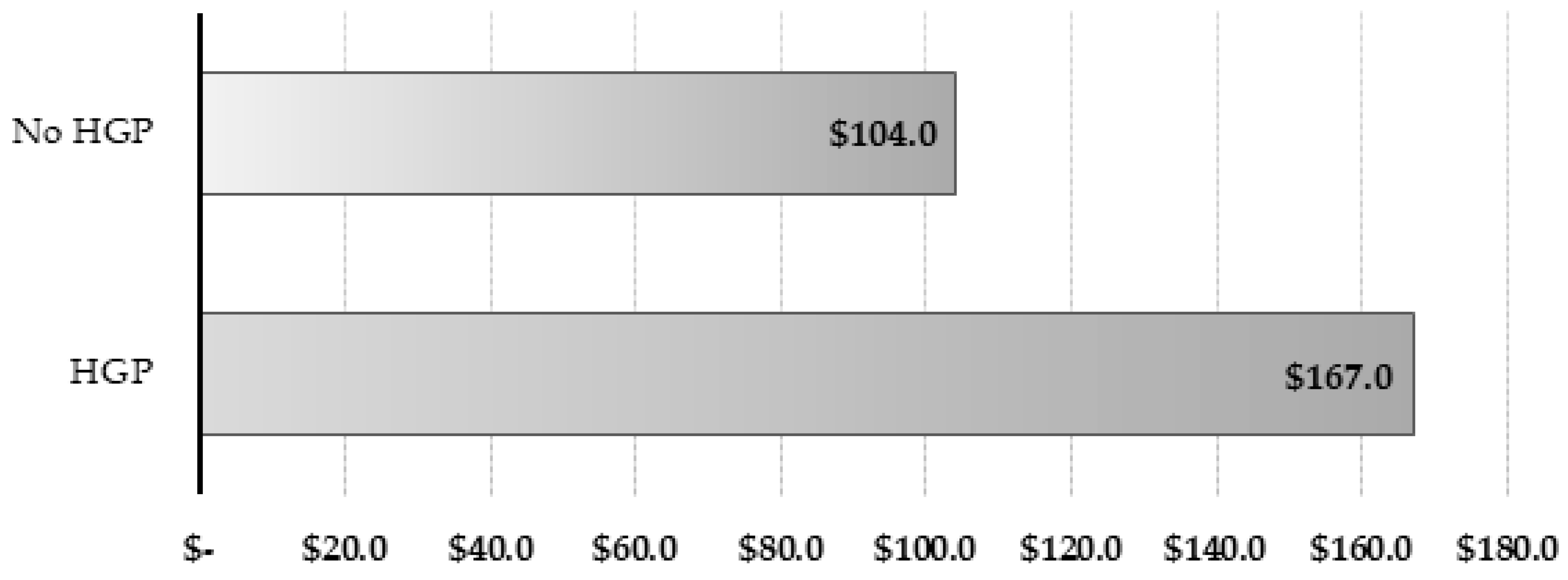
The marginal income per steer equally a result of using HGP (boilerplate) was 60.1% higher than the control grouping (Figure 4), that is, United states $63 more than the control grouping ($104–$167). Thus, this applied science generates a render of approximately 19.7 times its value.
4. Discussion
The benefits of using HGPs in the fattening phase nether feedlot weather have been extensively documented in countries ass Commonwealth of australia and USA. The best operation is explained by the sensitivity of the muscles to the HGP. This response is differentiated, existence greater in the extensor muscles associated with the long basic. Indeed, HGPs that combine estrogenic and androgenic hormones produce a greater response than implants of a unmarried hormone [fifteen,16]. It has been described that estrogen stimulates the production and release of hepatic somatotropin and besides insulin-1-similar growth cistron (IGF1). Together, these secondary hormones stimulate the accumulation of muscle proteins. On the other hand, androgens human activity mainly through direct activeness on musculus tissue, stimulating protein synthesis and reducing muscle catabolism [17]. Likewise, HGPs that combine estradiol and trenbolone acetate consequence in a greater number of musculus satellite cells, a greater expression of IGF-one mRNA in muscle tissue and an increase in circulating IGF-i levels [18]. They can too bear upon the rate of proliferation and/or the activation status of satellite cells [1]. These cells provide the nuclei needed to support the hypertrophy of postnatal muscle fibers and are critical to determining the speed and degree of muscle growth [17]. It should be noted that the number and size of muscle fibers present in muscle tissue play an important function in determining the rate and efficiency of muscle growth and feed conversion [15]. Still, there is besides reports of undesirable brute behavior associated with the utilization of implants that contains trenbolone acetate [xix]. Likewise, there is prove of negative effects on carcass quality, mainly related to marbling meanwhile, the results in tenderness have been variable [3].
Pasture fattening systems are characterized by exclusive grazing during the jump and/or the fall, depending on the geographical surface area and atmospheric condition conditions. Meanwhile, during the wintertime and summer flow, temperature and humidity restrictions affect the growth and quality of the pasture. During these periods the animals go along grazing but they are usually supplemented (advertising libitum) with harvested forages (silage and/or hay) and with or without minor cereal grains, which are supplied in a ratio of 1.0% to 1.5% of brute LW. Normally, in Republic of chile, beef breeds under these conditions reach ADG ranging between 0.eight to i.five kg/d for the jump flavour with terminal LW of 418 to 472 kg [20]. The observed ADGs herein were higher than those reported by Goic [21] for a barley silage rotation and silage system, that averaged in ii seasons of 1.16 kg/d but there are in the above-mentioned range. Hojas [22] compared the event of two HGPs with respect to the control without HGP in heifers of two genotypes (Hereford × Angus vs. Friesian) fattened in permanent pasture fertilized. The author stated the employ of daily grazing strips through the apply of electric argue by a 43 days period. The HGPs used had: (a) 200 mg of testosterone propionate + xx mg of estradiol benzoate; and (b) 140 mg of trenbolone acetate and 36 mg of Zeranol (Component EH and Ralone®, respectively). The author ended that the ADG of heifers with HGPs was higher than the control grouping (eleven.6%) but both were like to each other. Based on this data we tin can contend that the quality of the pasture during the spring flavor is enough to answer to the utilise of high potency HGP. Withal, one of the main challenges is the adequate grazing direction that allows avoiding sudden changes in the pasture quality that tin can be ascribable to inadequate direction decisions. Thus, the interaction of all factors including weather conditions, brute, pasture and the proper management determination must be considered [23].
On the other hand, ADGs herein reported were higher than those reported for animals grazing ryegrass at the United states of america (database of TBA implants) and by Farney and Corrigan [24]. However, it should be noted that in the USA written report, HGP of a bottom authorization was used in comparison to those used in our written report. In add-on, the United states study assessed the backgrounding stage and not the fattening stage as in our example. For instance, a recent study compared the furnishings of Revalor G (twoscore mg of trenbolone acetate and eight mg of estradiol) and Synovex I Grass (150 mg of trenbolone acetate and 21 mg of estradiol benzoate), a new implant with a different blanket engineering science, in stocker steers on a 90-d grazing season. No differences in ADG based on implant type (1.16 kg/d for Revalor-G and ane.13 kg/d for Synovex One Grass), were reported by the authors [24]. Berthiaume et al. [7], evaluated the outcome of HGPs in animals reared and finished with a diet based on fodder (pasture silage) but with no grazing. These authors concluded that ADG of fattening animals receiving HGP was 60% higher than those without HGP (1.18 vs. 0.74 ± 0.09 kg/d, respectively). This value was quite similar to the 60.1% reported in our study. In addition, the authors stated lower hot carcass weight (7.8%) and a lower quality (31%) for the animals that were not implanted. Thus, the authors conclude that in gild to achieve the same economic return the non-implanted animals must be sell to price that is sixteen% greater than those implanted steers.
Regarding the slow LW gain observed in all treatments (Figure 1) between the implanting day and the beginning weight control, this could have been due to the combined effect of adverse atmospheric condition weather condition and the stress that may take resulted from going through the squeezing chute. In addition, those weeks were characterized by existence unfavorable for the evolution and growth of the pasture, since Nov was colder than normal. Likewise, the air and soil temperatures were as well lower than normal, which translated into a lower accumulation of day degrees with respect to a normal twelvemonth.
To our knowledge, at present there are no reports of the effects of loftier potency HGP for cattle fattened under grazing weather condition, since ordinarily the implant potency is adapted to the energy level of the diet, which is usually higher in feedlot diets than under grazing conditions. According to this argument, it is proposed that high-potency implants are destined for feedlot cattle, whereas the low and moderate authorization implants are better for grazing cattle only unusual for the backgrounding stage. In the USA, technicians, often recommend moderate potency HGPs from belatedly leap to mid-summertime. In both mid-summertime and fall, when pasture energy levels are low, they recommend low-potency implants. It should be noted that the potency of the implant is determined by both the type of activity (androgenic vs. estrogenic) and the concentration of the hormones. Consequently, practically any implant containing TBA (40 to 200 mg) is considered of high say-so, while those based in estrogen (eight to 20 mg estradiol benzoate) are of lower potency. Finally, the utilization of this technology not merely implies a improve performance of the animal but also an improvement in the environmental and economic sustainability metrics [25], in a context of growing global beef demand, particularly from intensive grazing systems. Thus, zones with high-quality grasslands like southern Chile, Argentine republic and Uruguay have an of import role in supplying beefiness. In fact, it has been estimated that intensive grazing systems supply about 20% of global beefiness product [6].
5. Conclusions
Under the weather in which the study was developed, it is possible to conclude that steers under grazing conditions receiving a growth-promoting implant accomplished a greater average daily weight gain than those that were not implanted. Too, there were no differences between comparative HGPs, and its utilization generates an important economic return to cattlemen.
Author Contributions
R.A. and C.S.-C. are coprincipal investigators that conceived and supervised the report. C.South.-C. executed the experiment and collected the information. R.A. did the statistical analysis and wrote the first draft. A.V. contributed to editing the manuscript and the terminal review.
Funding
This research received no external funding.
Acknowledgments
The authors thank all of the members at the commercial subcontract "Die Blume" for their generous collaboration in this research.
Conflicts of Interest
The authors declare no conflict of interest.
References
- Webb, A.S.; Rogers, R.W.; Rude, B.J. Review: Androgenic, Estrogenic and Combination Implants: Production and Meat Quality in Beef. Prof. Anim. Sci. 2002, xviii, 103–106. [Google Scholar] [CrossRef]
- Nichols, W.T.; Galyean, M.L.; Thomson, D.U.; Hutcheson, J.P. Effects of Steroid Implants on the Tenderness of Beef. Prof. Anim. Sci. 2002, 18, 202–210. [Google Scholar] [CrossRef]
- Duckett, S.K.; Pratt, S.L. MEAT SCIENCE AND Muscle BIOLOGY SYMPOSIUM—Anabolic implants and meat quality. J. Anim. Sci. 2014, 92, 3–nine. [Google Scholar] [CrossRef]
- Capper, J.L. The ecology touch of beef production in the United states of america: 1977 compared with 2007. J. Anim. Sci. 2011, 89, 4249–4261. [Google Scholar] [CrossRef]
- Steinfeld, H.; Haan, C.; Blackburn, H. Livestock-environment interactions: Bug and options. In Livestock-Environment Interactions: Issues and Options; FAO: Suffolk, Great britain, 1996; p. 56. [Google Scholar]
- Gerber, P.J.; Mottet, A.; Opio, C.I.; Falcucci, A.; Teillard, F. Ecology impacts of beef production: Review of challenges and perspectives for durability. Meat Sci. 2015, 109, 2–12. [Google Scholar] [CrossRef] [PubMed]
- Berthiaume, R.; Mandell, I.; Faucitano, L.; Lafreniere, C. Comparing of alternative beef production systems based on forage finishing or grain-fodder diets with or without growth promotants: 1. Feedlot performance, carcass quality, and product costs. J. Anim. Sci. 2006, 84, 2168–2177. [Google Scholar] [CrossRef] [PubMed]
- Faucitano, L.; Chouinard, P.Y.; Fortin, J.; Mandell, I.B.; Lafreniere, C.; Girard, C.50.; Berthiaume, R. Comparison of culling beefiness production systems based on forage finishing or grain-forage diets with or without growth promotants: 2. Meat quality, fatty acid composition, and overall palatability. J. Anim. Sci. 2008, 86, 1678–1689. [Google Scholar] [CrossRef] [PubMed]
- Comerford, J.Westward.; Harpster, H.Due west.; Baumer, V.H. The effects of grazing, liquid supplements, and implants on feedlot operation and carcass traits of Holstein steers. J. Anim. Sci. 2001, 79, 325–332. [Google Scholar] [CrossRef] [PubMed]
- Blasi, D.A.; Kuhl, Thousand.50. Effects of Revalor-G®, Ralgro®, and Synovex-H® on the functioning of stocker heifers grazing irrigated rye pasture. In Cattlemen´s 24-hour interval; Kansas State University, Ed.; Agronomical Experiment Station and Cooperative Extension Service, Kansas Country University: Manhattan, KS, The states, 1998; pp. 126–128. [Google Scholar]
- Cleale, R.M.; Hilbig, D.R.; Curt, T.H.; Sweiger, S.H.; Gallery, T. Effects of Synovex One Grass, Revalor-K, or Encore implants on performance of steers grazing for up to 200 days. Prof. Anim. Sci. 2018, 34, 192–201. [Google Scholar] [CrossRef]
- Birkelo, C.P. Pharmaceuticals, straight-fed microbials, and enzymes for enhancing growth and feed efficiency of beef. Vet. Clin. Prod. Anim. 2003, 19, 599–624. [Google Scholar]
- Anrique, R.; Molina, X.; Alfaro, M.; Saldaña, R. Composición de alimentos para el ganado bovino, 4ta ed.; Consorcio Lechero Universidad Austral de Chile: Valdivia, Republic of chile, 2014; p. 91. [Google Scholar]
- National Academies of Sciences, Engineering, and Medicine. Food Requirements of Beef Cattle: Eighth Revised Edition; The National Academies Press: Washington, DC, USA, 2016; p. 494. [Google Scholar] [CrossRef]
- Dayton, W.R.; White, M.Eastward. Mechanisms of anabolic steroid activeness in bovine skeletal muscle. In Evaluating Veterinary Pharmaceutical Behavior in the Environment; Cobb, Thou.P.A.South.P.N., Ed.; American Chemic Social club: Washington DC, U.s., 2013; Volume 1126, p. 12. [Google Scholar]
- Reinhardt, C. Growth-promotant implants: Managing the tools. Vet. Clin. North. Am. Food Anim. Pract. 2007, 23, 309–319. [Google Scholar] [CrossRef] [PubMed]
- Dayton, Westward.R.; White, Thou.E. Cellular and molecular regulation of muscle growth and development in meat animals. J. Anim. Sci. 2008, 86, E217–E225. [Google Scholar] [CrossRef] [PubMed]
- Dayton, W.R.; White, M.E. MEAT SCIENCE AND MUSCLE Biology SYMPOSIUM—Role of satellite cells in anabolic steroid-induced muscle growth in feedlot steers. J. Anim. Sci. 2014, 92, 30–38. [Google Scholar] [CrossRef] [PubMed]
- Stackhouse-Lawson, K.R.; Tucker, C.B.; Calvo-Lorenzo, Thousand.Southward.; Mitloehner, F.Yard. Effects of growth-promoting technology on feedlot cattle behavior in the 21 days before slaughter. Appl. Anim. Behav. Sci. 2015, 162, 1–8. [Google Scholar] [CrossRef]
- Goic, L.; Iraira, S. Recría Engorda en Pastoreo. In Producción y Manejo de Carne Bovina en Chile; Catrileo, A.S., Ed.; Instituto de Investigaciones Agropecuarias. Ministerio de Agricultura: Temuco, Chile, 2005; Book sixteen, pp. 275–293. [Google Scholar]
- Goic, Fifty. Sistemas Productivos para la zona sur (X región). In Producción y Manejo de Carne Bovina en Chile; Catrileo, A.Southward., Ed.; Instituto de Investigaciones Agropecuarias. Ministerio de Agricultura: Temuco, Chile, 2005; Volume xvi, pp. 405–433. [Google Scholar]
- Hojas, A. Evaluación de dos compuestos hormonales en la engorda de vaquillas; Universidad Austral de Chile: Valdivia, Republic of chile, 2004. [Google Scholar]
- Goic, L. Manejo de pastoreo en praderas perennes. In Producción y Manejo de Carne Bovina en Chile; Catrileo, A.S., Ed.; Instituto de Investigaciones Agropecuarias. Ministerio de Agricultura: Temuco, Republic of chile, 2005; Volume 16, pp. 95–114. [Google Scholar]
- Farney, J.K.; Corrigan, Thou. Curt Communication: Evaluation of two implants for growing steers grazing alpine-grass prairie when using intensive early on stocking. Appl. Anim. Sci. 2019, 35, 83–87. [Google Scholar] [CrossRef]
- Capper, J.L. Is the grass ever greener? comparing the environmental bear upon of conventional, natural and grass-fed beefiness production systems. Animals 2012, 2, 127–143. [Google Scholar] [CrossRef] [PubMed]
Figure 1. Records of ambience temperature (AT, lines, at the left axis) and daily rain precipitations (P, bars, at the correct axis) for the report period. Data provided by the meteorological station of Cranberries Austral Chile South.A., located 3.v km from the study location.
Figure 1. Records of ambient temperature (AT, lines, at the left axis) and daily rain precipitations (P, bars, at the right axis) for the report menstruation. Information provided past the meteorological station of Cranberries Austral Chile S.A., located 3.5 km from the study location.
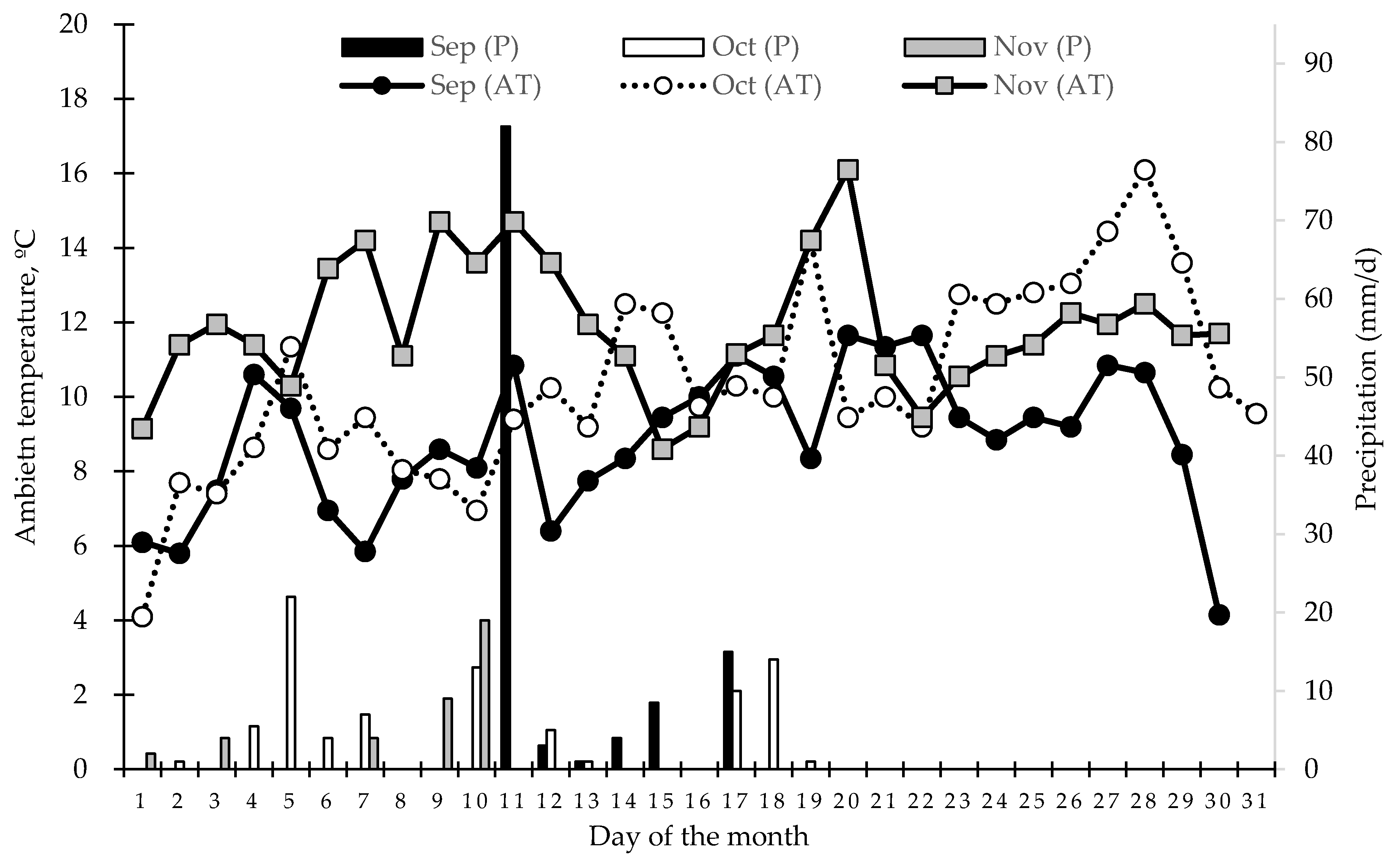
Figure two. Development of body weight gain of steers during the written report period (SEM) (HGP = hormonal growth promoting).
Effigy 2. Evolution of trunk weight proceeds of steers during the study menstruation (SEM) (HGP = hormonal growth promoting).
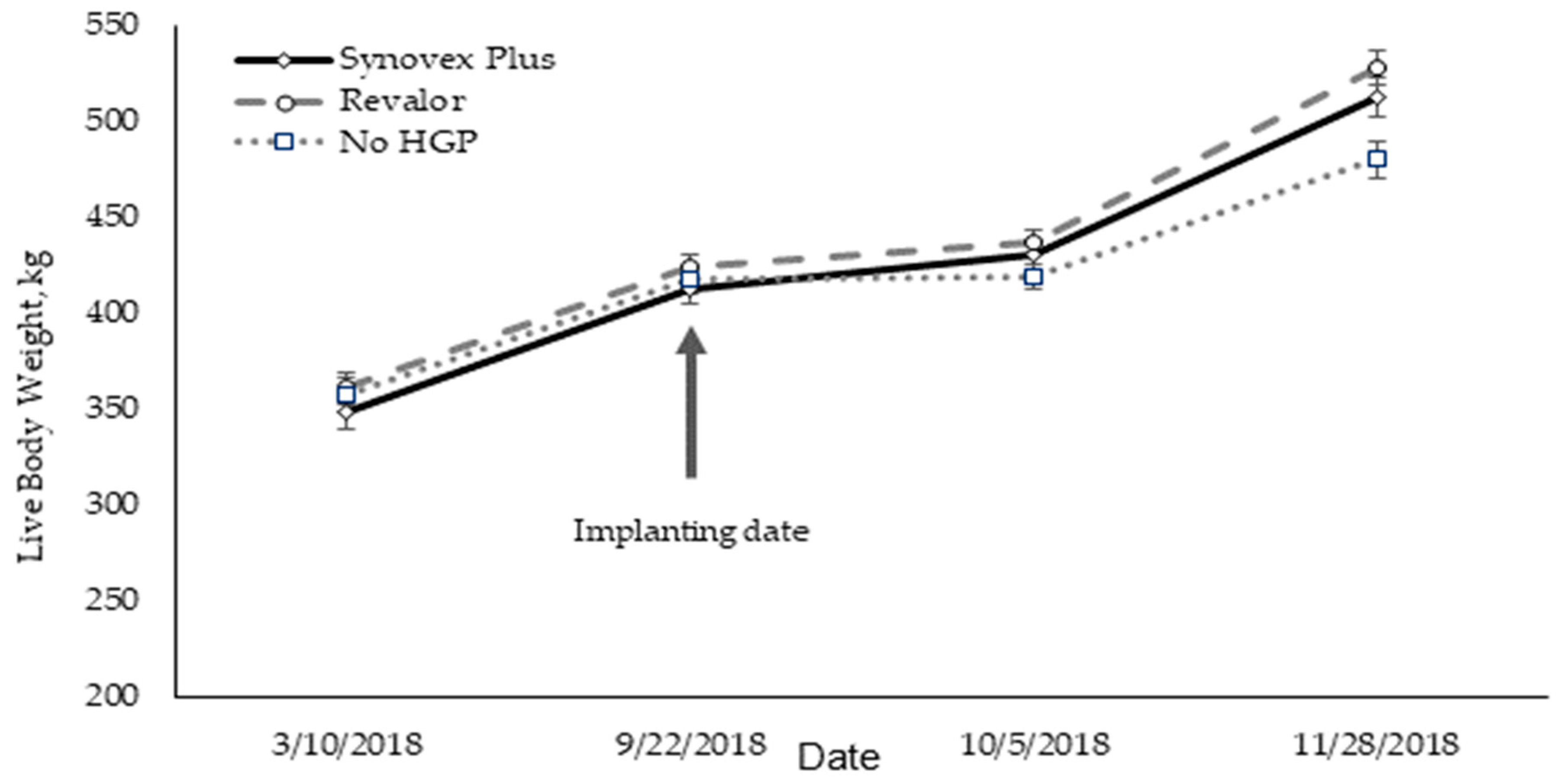
Figure three. Boilerplate daily weight gains (kg/d) of steers according to the number of days after growth promoting implantation (SEM). Unlike letters indicate differences between groups according to Tukey's examination (p < 0.05) (HGP = hormonal growth promoting).
Figure iii. Boilerplate daily weight gains (kg/d) of steers according to the number of days after growth promoting implantation (SEM). Unlike messages indicate differences betwixt groups according to Tukey's test (p < 0.05) (HGP = hormonal growth promoting).

Effigy 4. Marginal income (United states $) per steer obtained due to the use of growth promoting implants (Implant toll + Labor = United states of america $iii.2 per animal. Sale toll US $1.7 per kg of BW (Sale Osorno FEGOSA; HGP = hormonal growth promoting)).
Figure 4. Marginal income (Usa $) per steer obtained due to the use of growth promoting implants (Implant cost + Labor = US $3.2 per animate being. Sale price US $1.7 per kg of BW (Auction Osorno FEGOSA; HGP = hormonal growth promoting)).
Tabular array ane. Nutritional characteristics of the pasture grazed in the report 1.
Table one. Nutritional characteristics of the pasture grazed in the study ane.
| Item | March | September | Octuber | Nov |
|---|---|---|---|---|
| DM content, % | 16.38 | 14.48 | 15.41 | xvi.95 |
| Crude Protein (CP), % | 23.04 | 28.29 | 26.08 | 23.22 |
| Neutral Fiber Detergent (NDF), % | 46.06 | 38.67 | 39.22 | 41.seventy |
| Acid Fiber Detergent (ADF), % | 22.64 | 19.76 | 21.xx | 21.45 |
| ME, Mcal/kg DM | 2.65 | 2.75 | 2.77 | 2.76 |
| NEm, Mcal/kg DM | one.73 | 1.82 | 1.84 | 1.83 |
| NEg, Mcal/kg DM | i.12 | 1.19 | 1.21 | 1.xx |
© 2019 by the authors. Licensee MDPI, Basel, Switzerland. This article is an open access commodity distributed nether the terms and weather of the Artistic Eatables Attribution (CC By) license (http://creativecommons.org/licenses/past/4.0/).
salvadordoets1973.blogspot.com
Source: https://www.mdpi.com/2076-2615/9/9/587/htm
0 Response to "Revalor Brand Growth Hormone Beef Cattle"
Post a Comment